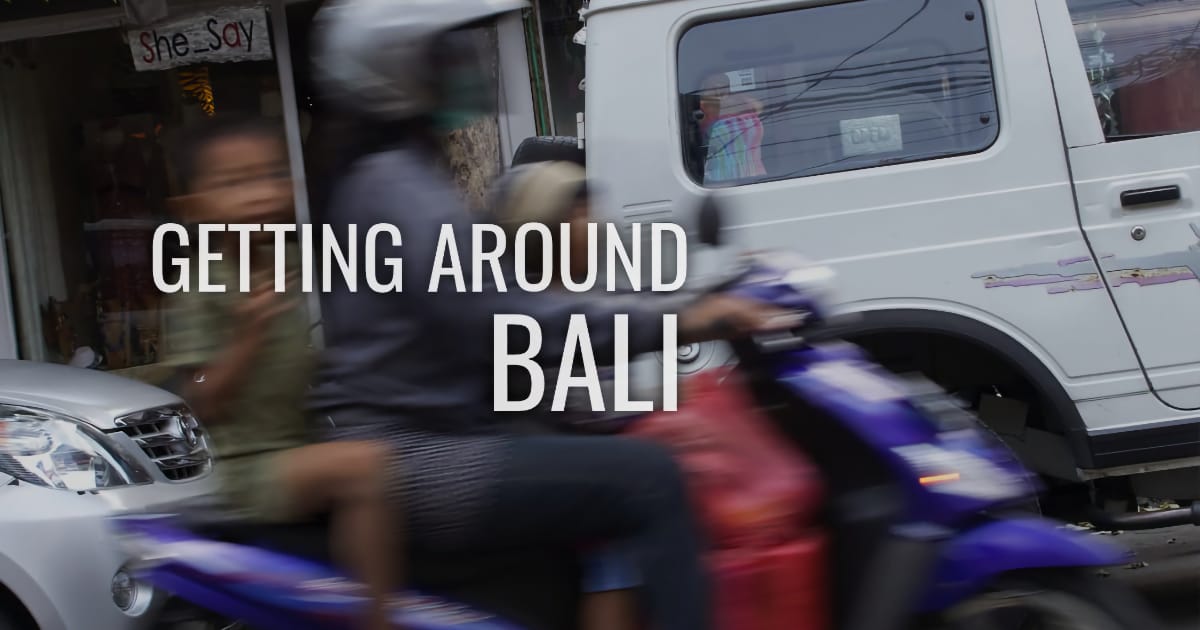
How to Get Around Bali
We realized early in our stay that we’d need some kind of vehicle in Bali. That choice turned out to be more complicated than we thought.
Read More
We spent three weeks pretty much just exisiting at a quiet villa on the outskirts of Ubud Village. This is where we really started to appreciate slow travel.

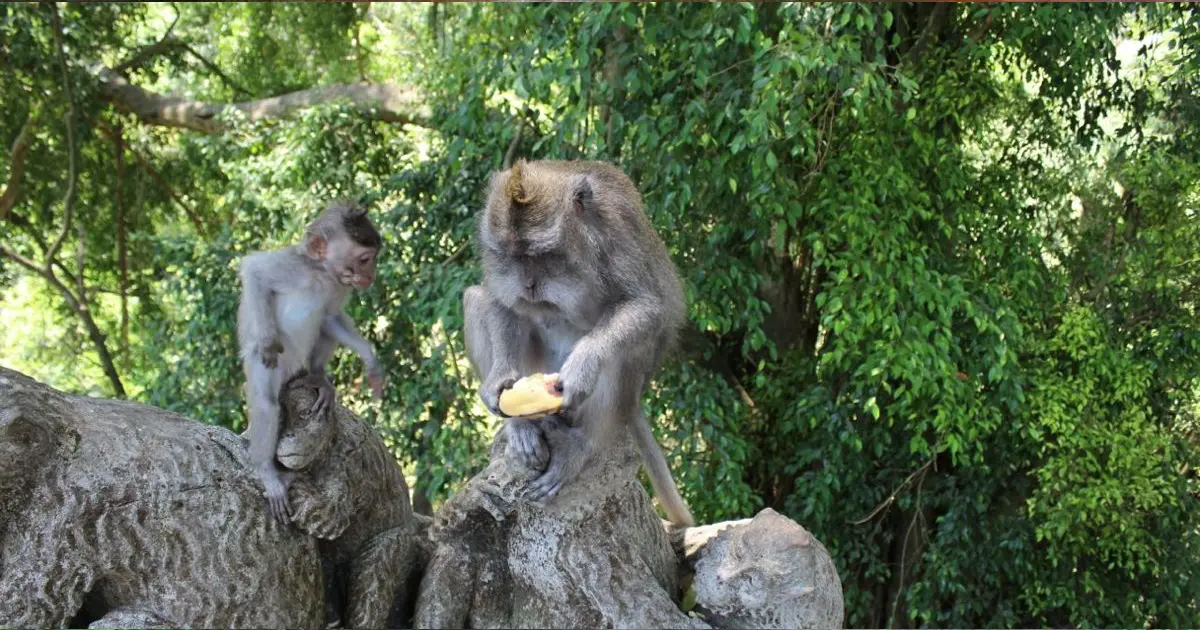
Which isn’t to day we were totally sedentary. We did see many interesting sights in the surrounding countryside, and even took time to be attacked by monkeys in the Sacred Monkey Forest and relax in the wonderful Pondok Pekak Library.
The mornings in Bali belong to roosters and dogs. Fortunately, unlike the roosters we met on the farm in Western Australia, Balinese roosters seem to have a little respect and don’t start in with the crowing until first light, which is about 4:30 in the morning.
The dogs, though, aren’t quite as courteous and can frequently be heard through the night. Once one of them gets to barking, there’s a flurry of yips and yaps that can sometimes go on for several minutes.
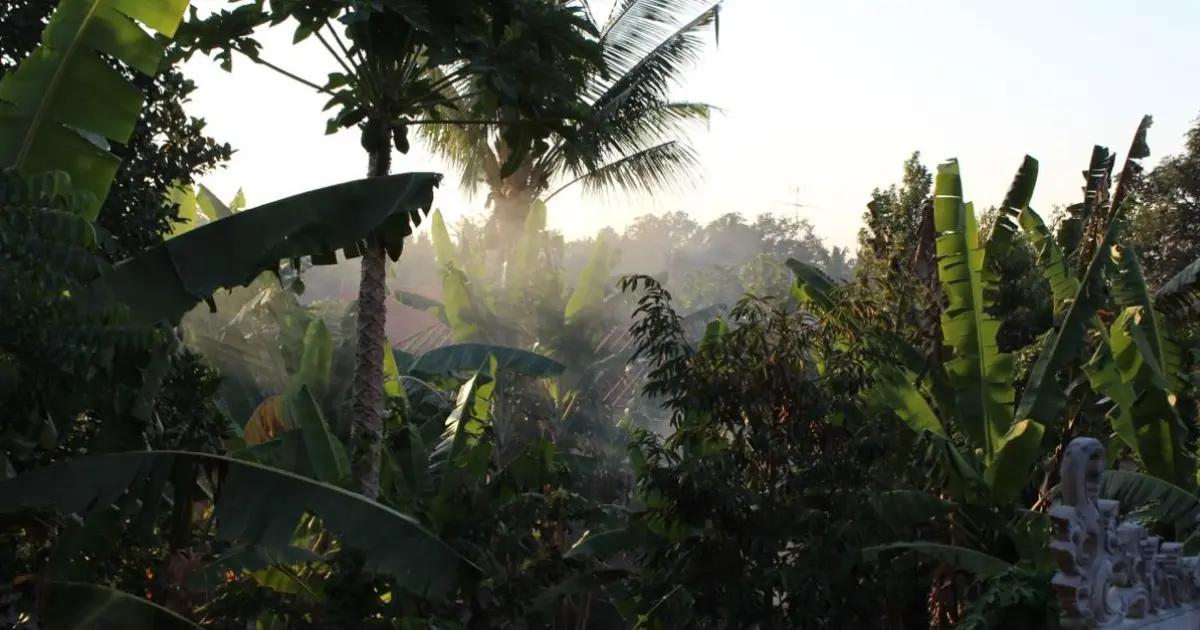
The first thing we noticedd on our first morning in Bali was was a the rich smell of smoke. Something is always burning in Bali — incense, trash, offerings, rice paddies, food — and the Balinese air is thick and chewy, tasting of ash that settles deep in the back of your throat.
Almost every time we left the villa, we were greeted by a row of baskets, right on the street, each holding a single chicken. On closer inspection we realized these were roosters.
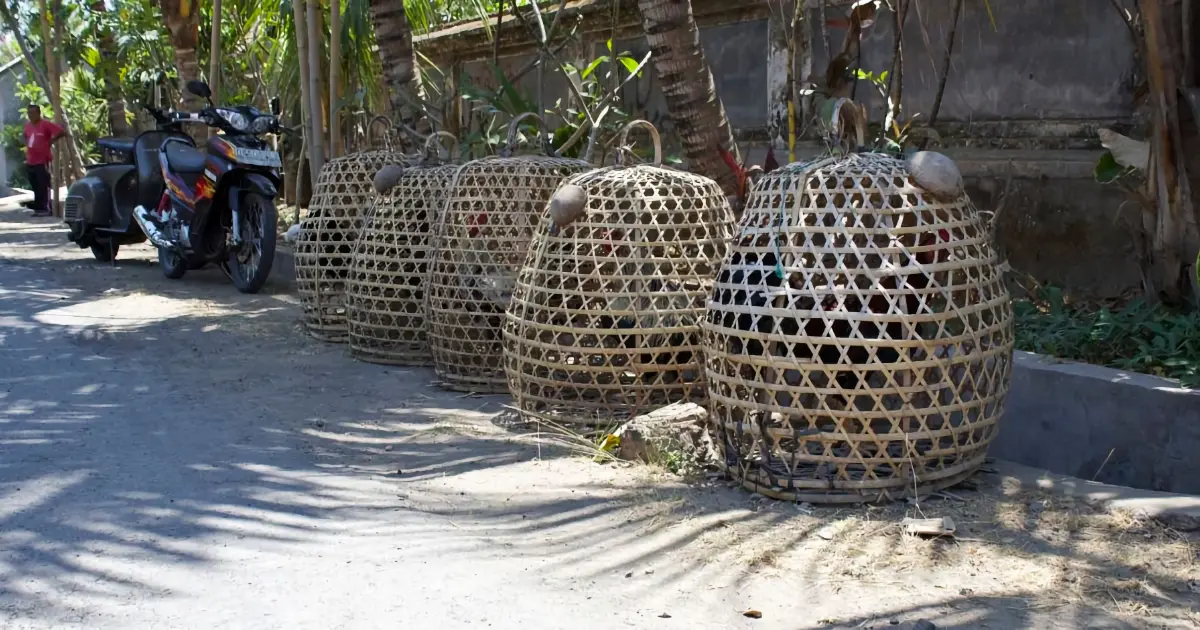
We found out later that these birds were used for ceremonial cockfighting (tajen) as part of cleansing ceremony called tabuh rah (pouring blood), where the blood of the losing chicken is used to appease evil spirits.
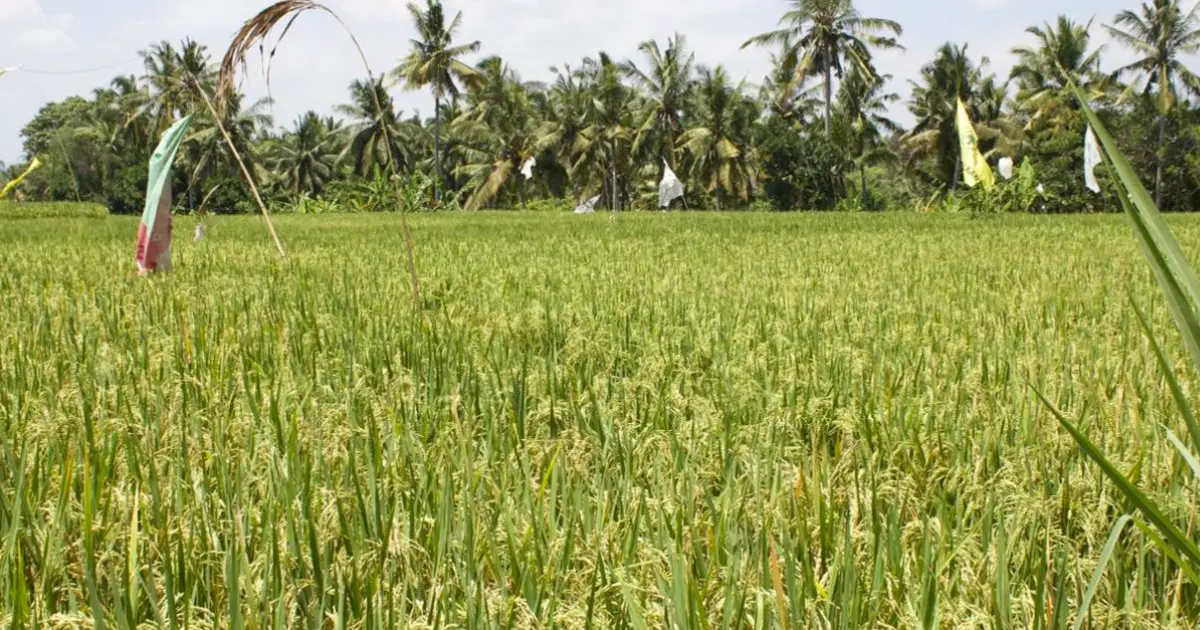
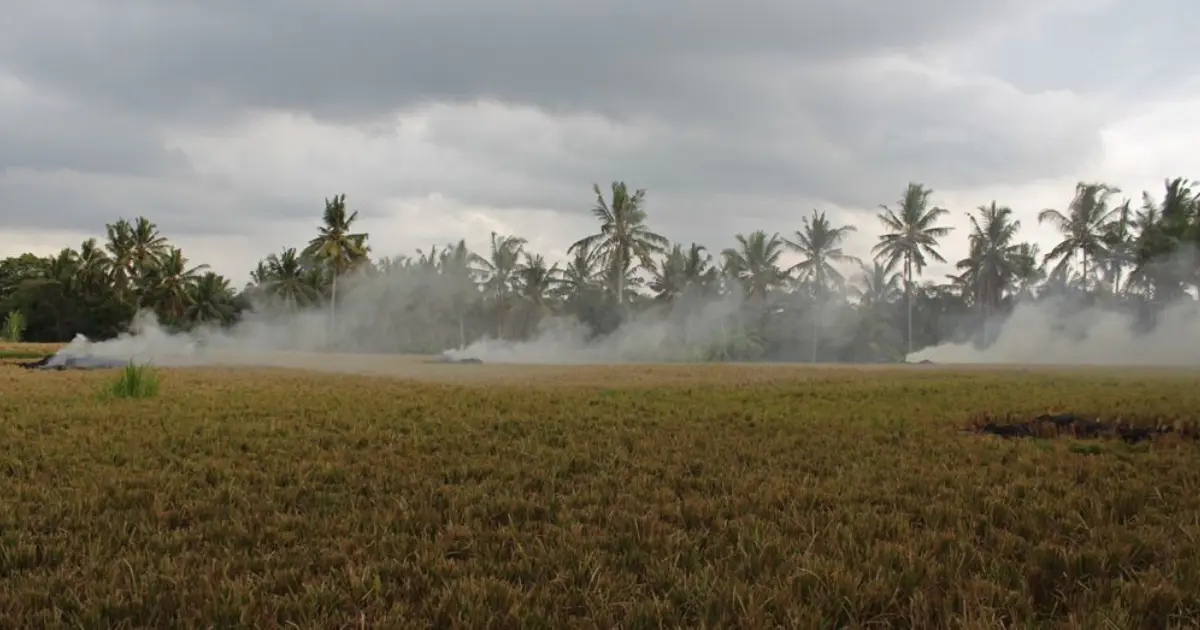
On our first long walk into Ubud Village, we walked by a moderate-sized rice paddy. No one was working it when we went by, but in later days we’d see workers leaving the fields about 6:00 p.m. carrying huge bundles of harvested rice on their backs. And before we left Bali, we’d see it burned as well.
We were staying at Pukakoo Villa, which was about a 45 minute walk, one way, from downtown Ubud. We didn’t want to make that trek every day we were in Bali, so the first thing we needed to figure out was How to Get Around Bali.
We realized early in our stay that we’d need some kind of vehicle in Bali. That choice turned out to be more complicated than we thought.
Read MoreAlong Jalan Hanoman on our many trips into Ubud Village, we saw numerous of warungs, which are small, usually family-owed, shops. These come in a wide variety of size, quality, and function. Some are very much like small convenience stores that sell everything from cigarettes to bottled water to ice cream to petrol, while others are small cafes or even larger sit-down restaurants.
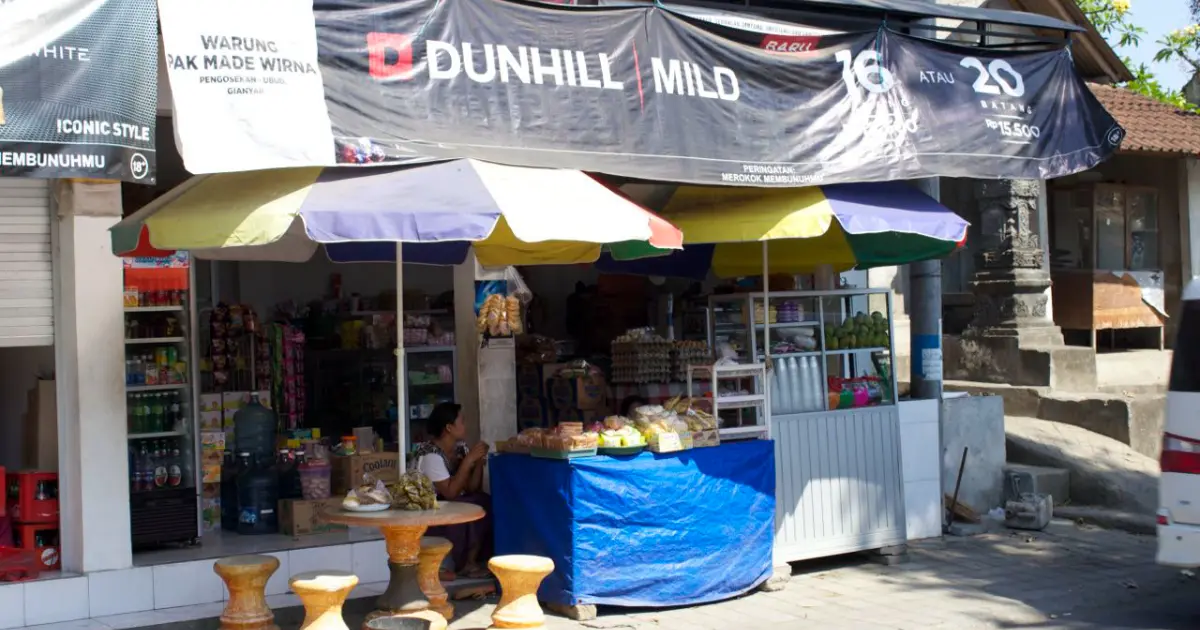
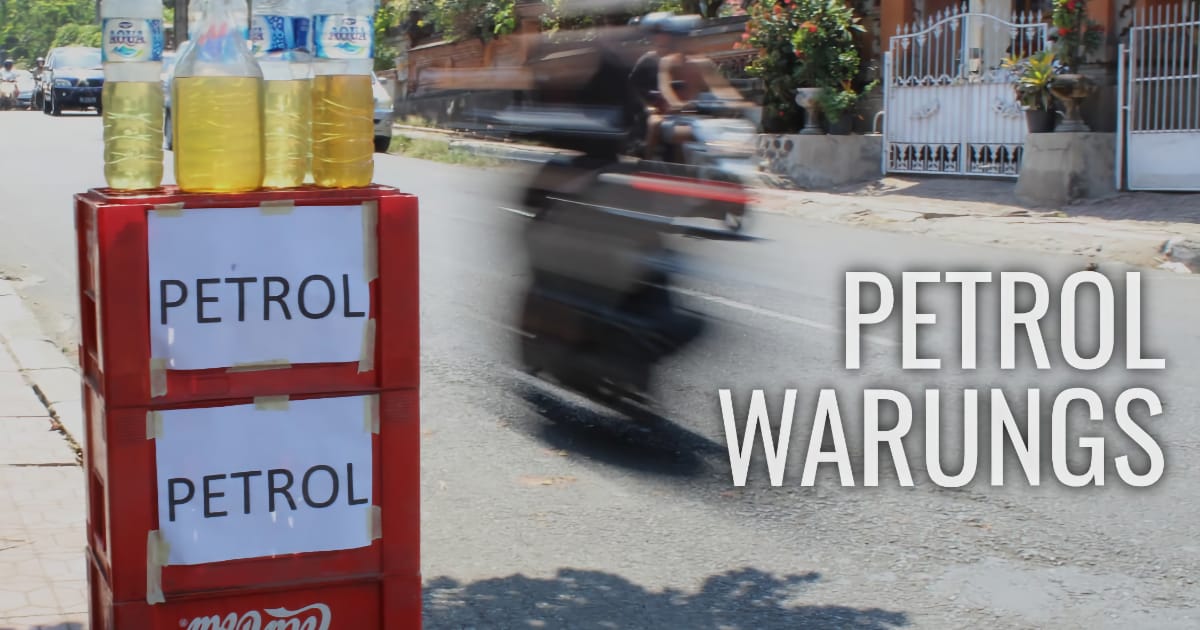
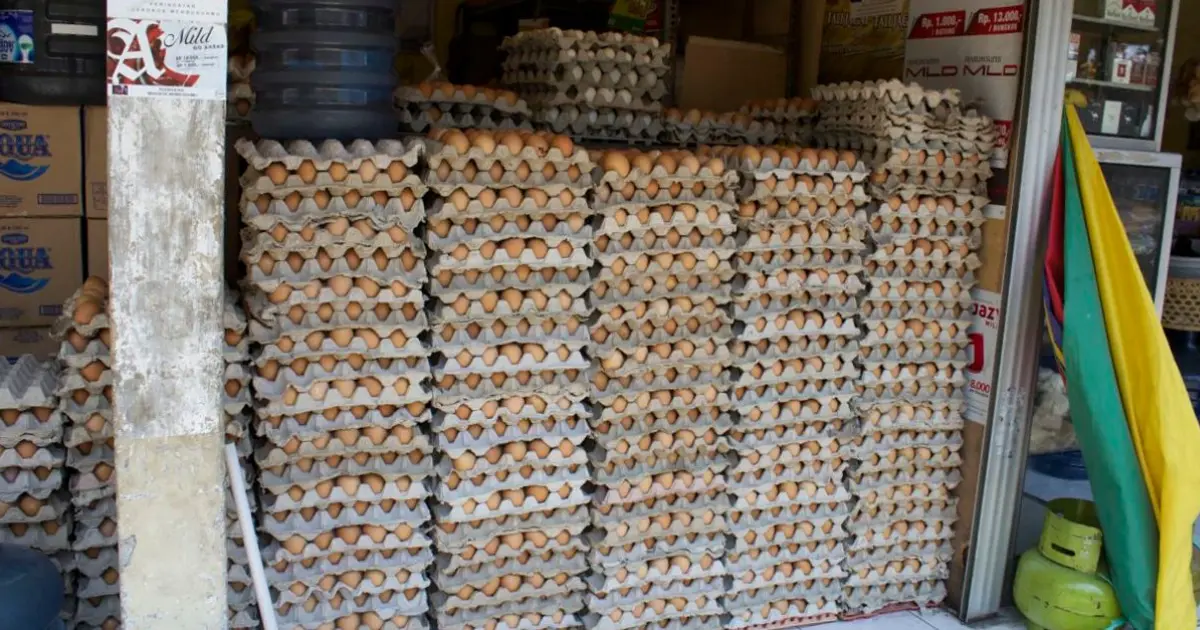
In addition to the warungs, there were plenty of other types of shops, including quite a few motorbike mechanic shops, plenty selling various Balinese trinkets, and one that sold eggs. A lot of eggs.
We encountered many scrawny, raggedy, semi-feral dogs during our time in Bali. Most seemed to have territories they defend with aggressive barking.
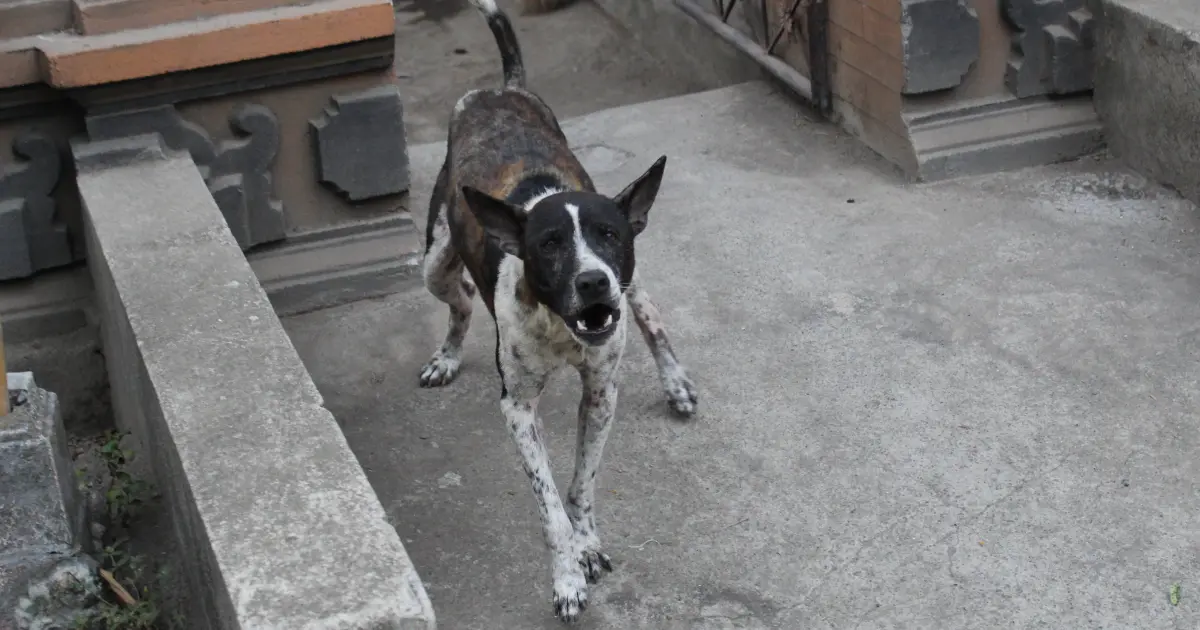
After after the Bali rabies outbreak of 2008, people weren’t all that fond of these dogs — we were warned about them often. Despite these warnings, most of the dogs we encountered were mostly relaxed, aside from a few outward shows of canine aggression.
But since the problem of dogs and rabies was said to be more severe in Vietnam and Thailand than Bali, we’re glad that, despite the cost, we had the kids vaccinated for rabies as part of our travel preparations.
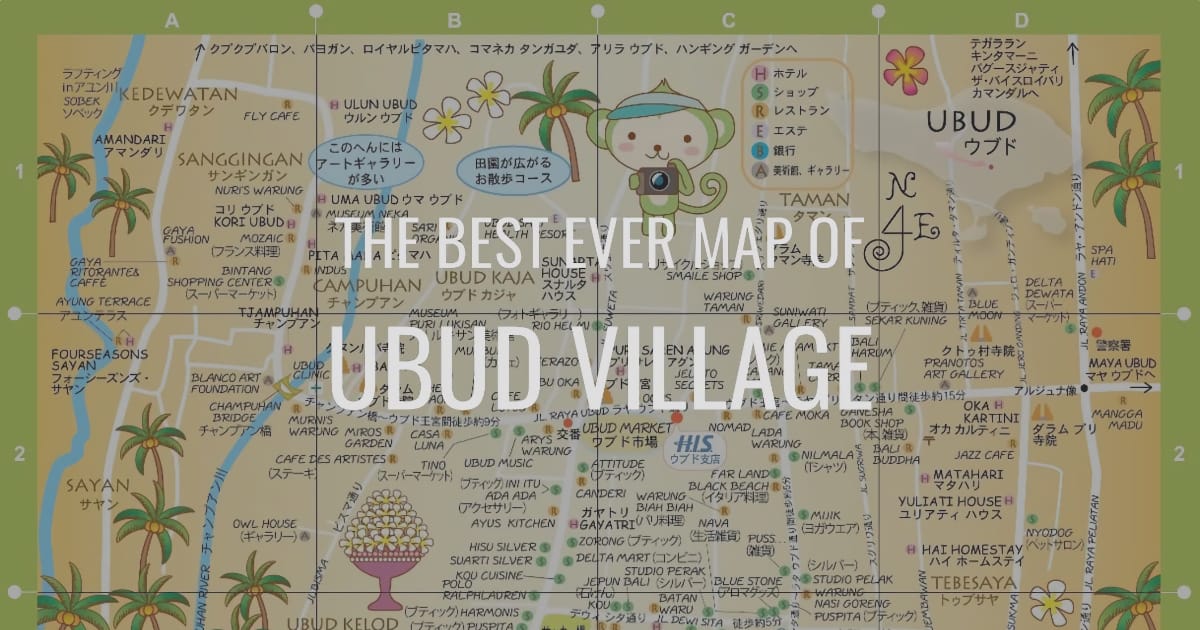
Our favorite map for navigating Ubud Village. It may be a little out of date now, but it was essential for walking around the mellow streets of Ubud Village.
Read MoreUbud Village — despite its reputaution as a spiritual destination and a respite from the excesses of Western culture — is jammed full of Western stores like Billabong, Ripcurl, and Dairy Queen (which was the most surprising). As we waked the streets of Ubud, we spotted three different Polo stores.
But among all those familiar names, there were plenty of unusual and unique stores to peruse as well.
When we wanted a break from the commercial side of things, we’d visit the Pondok Pekak Library and Learning Center, Ubud’s only library that has a collection of 30,000 books (including a large selection of children’s books) in more than ten languages.
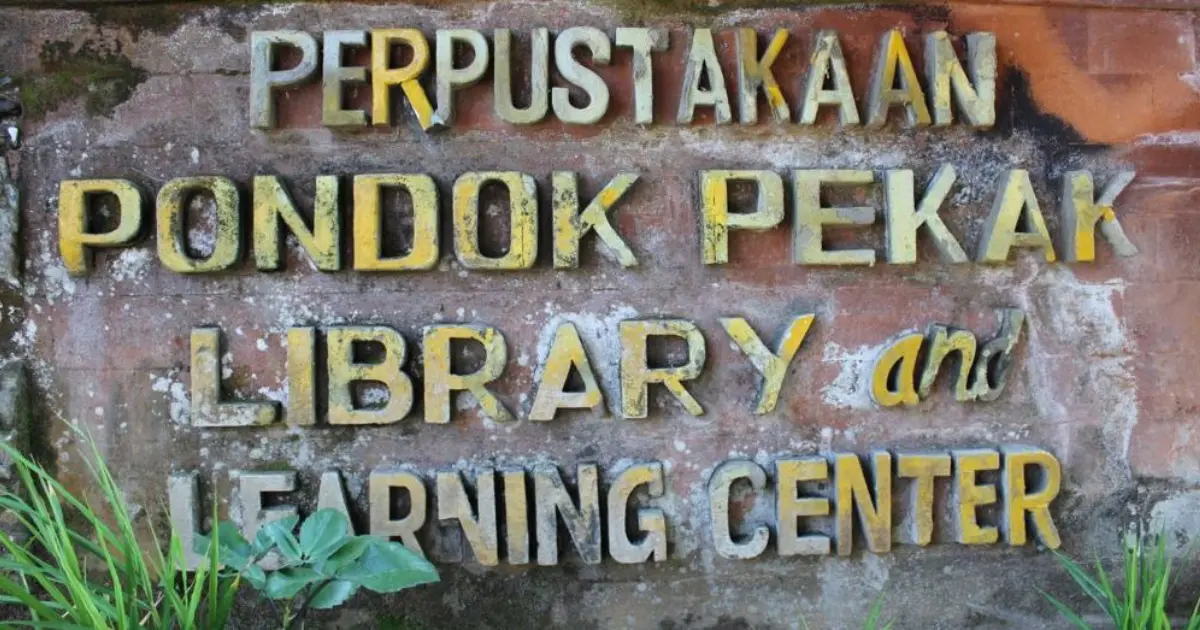
Pondok Pekak means “grandfather’s little resting house in the rice field,” and it’s not in a rice field anymore; instead it’s on the east side of the village’s football field.
The library was founded by an American expatriate named Laurie Billington in 1995. Billington loved books and reading and wanted to bring that love of reading to Ubud. But these days the library is much more than just a place to borrow books; it also serves as an educational center where people can take Indonesian language courses, silver jewelry making classes, “Art of Bali” lessons, Indonesian Gamelan lessons, and much more.
You can’t really talk about Ubud Village without mentioning the Sacred Monkey Forest, which sits on the south east side of the town.
We had an interesting (as in a little scary) experience as we toured this forest, and we can’t really recommend the experience.
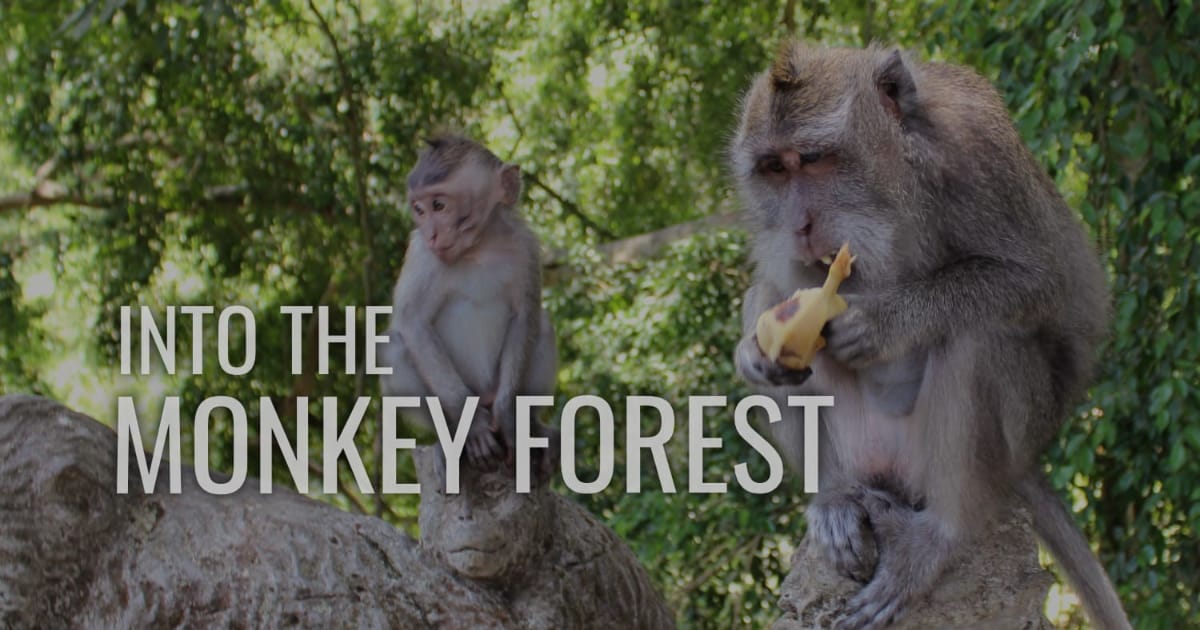
Our experience in Bali’s famous Sacred Monkey Forest was a lot more harrowing than we had expected.
Read More
The Paradiso is Ubud’s only cinema, and it bills itself as the world’s first organic vegetarian movie theater. One night they were playing the The Rise of the Planet of the Apes, and after our experience in the Sacred Monkey Forest, we thought that might be a little cathartic to watch that (spoiler: it wasn’t).
When we visited, the theater was adjacent to the Down to Earth Cafe, just off Jl. Hanoman, an organic vegetarian restaurant that probably explains the movie theater’s claim to fame.
As we sat waiting for the movie to begin, enjoying our vegan food and drinks, a man walked into the theater from the restaurant and sat down behind us. He was bald, bare-chested, and wore nothing but a sarong around his waist — a fairly typical outfit for an soul-seeking expatriate Westerner. As we got to talking, we learned he was from Santa Monica and had been living in Ubud for about a year.
He was a little put out when we mentioned that a few of the places we’d visited in Ubud Village reminded us of Santa Monica (especially Clear Cafe, at least before it burned down in 2014 — a few months after our visit).
Then he proceeded to tell us that that evening was Purnama, a festival to celebrate the full moon, and we might want to go out and see it instead of being corrupted by a Hollywood movie.
”It’s not a big deal for me,“ he said, ”because I live here, but for you guys ...“ He gave a little shrug as his words trailed off.
I thanked him for the information, but as we’d ordered food and paid for the movie, we were going to settle in here for the night. He replied with a smarmy mutter of, ”Well, Planet of the Apes it is, then.“
Thank you, kind sir, for judging my family based solely on your own world view. We ignored each other after that, and, thankfully, he wasn’t around when the movie ended.
We’d promised a few people some postcards, so during our stay in Ubud, we occasionally dropped postcards into the local mail box.
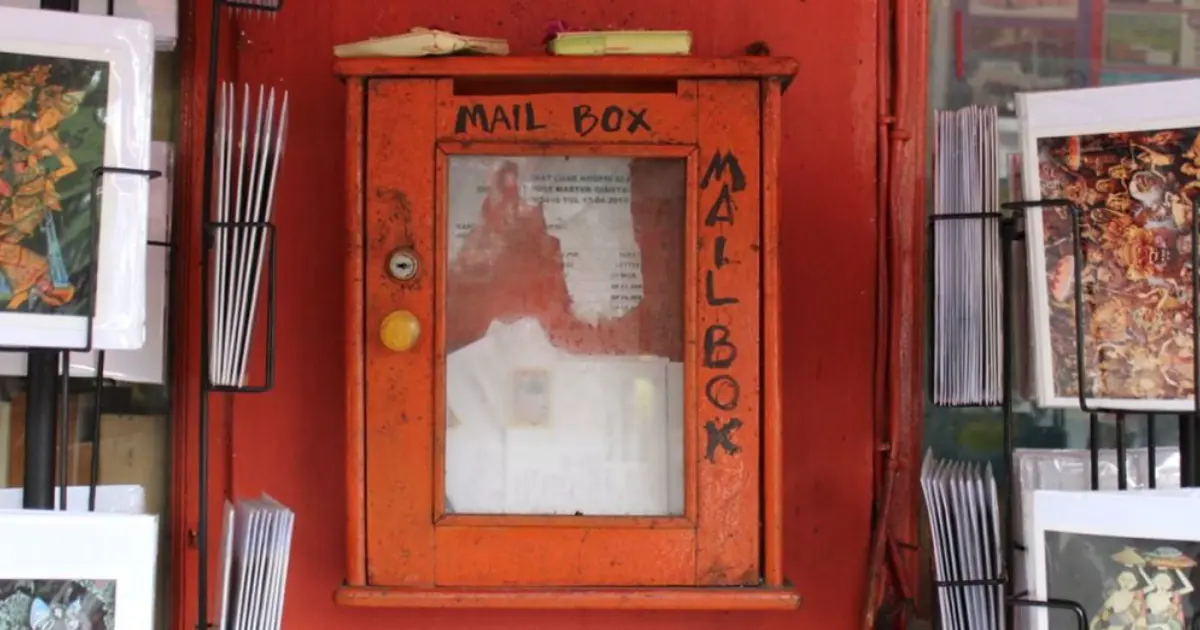
Yes, it looks very dodgy. So while we hoped these postcards would arrive, none of them ever did. This mail box is a trap.
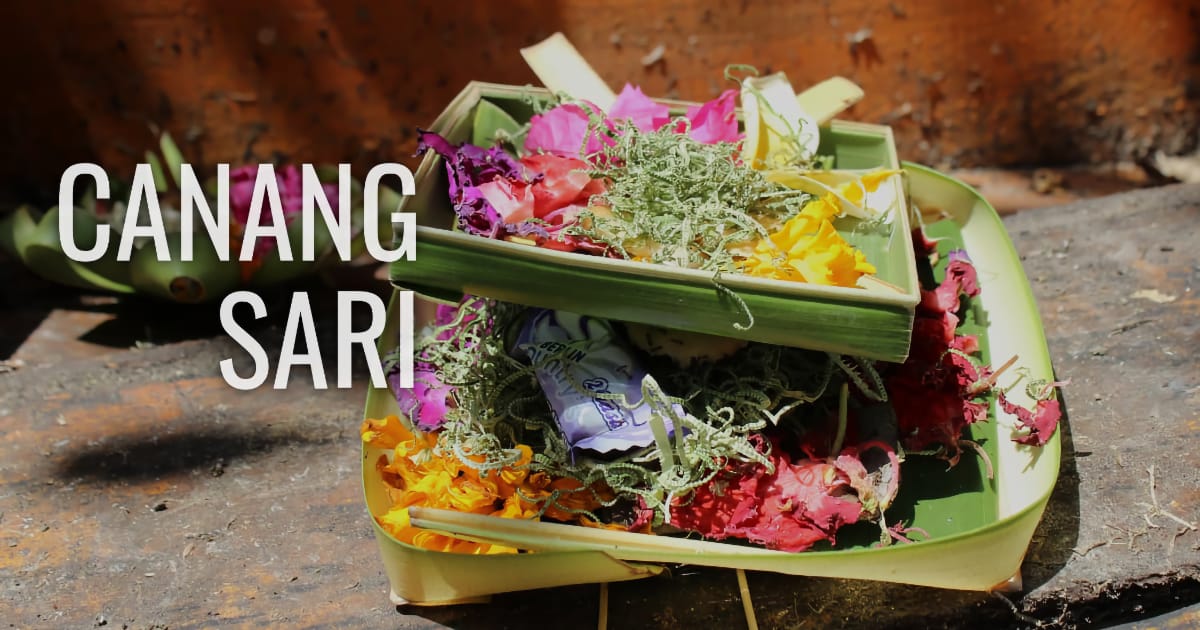
Canang sari are daily offerings to appease the spirits. And you can find them everywhere in Bali.
Read MoreOne of the big outings we went on during the first few days in the country was a day tour of the region that ended with a sunset view of Tanah Lot.
This was a package trip our hosts put together that included a few notable Balinese tour destinations. We visited an artist village (which was mostly forgettable) before we visited the Teba Sari coffee plantation to learn about Balinese coffee production in general and kopi luwak specifically.
Bali (as well as a few other countries) is famous among coffee drinkers for its production of coffee that has passed through the digestive system of the palm civet. And while that was one of the primary points of this particular coffee tour, the entire production here felt totally contrived and — because of plantation’s treatment of the its resident palm civets — cruel at best.
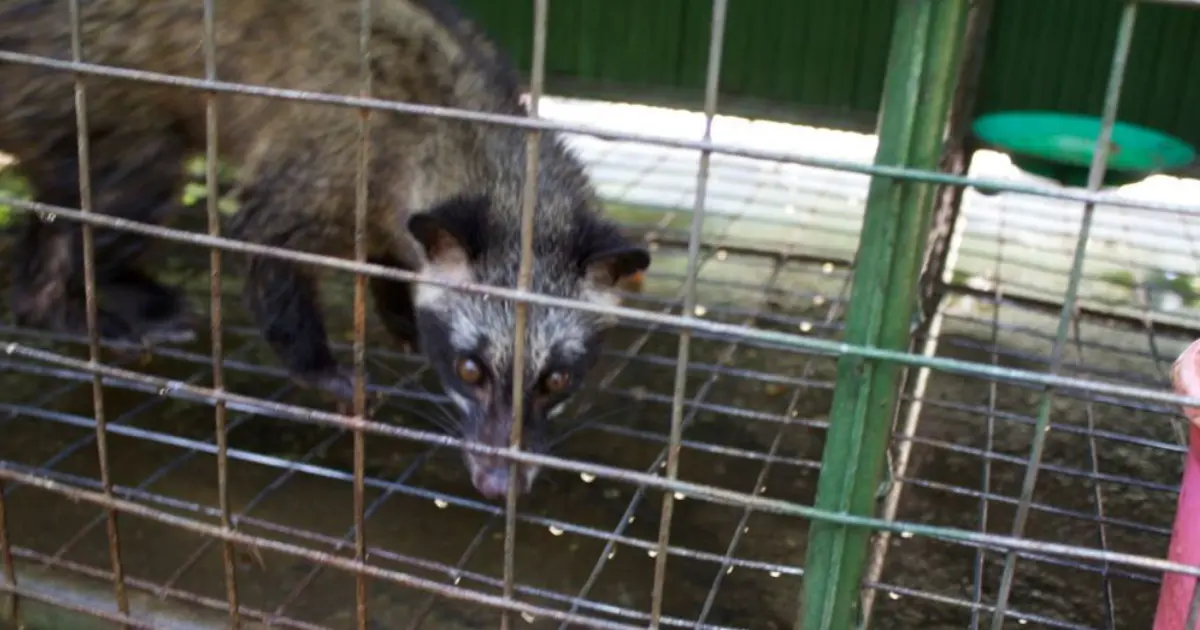
I wrote more about the Balinese coffee experience in The Joy and Guilt in a Cup of Kopi Luwak at Medium.
This temple (pura means temple) was built in 1634 on an island in Tukad Sayan, a small stream.
The temple’s relationship to water is what makes it part of a greater UNESCO World Heritage Site (the all-encompassing cultural landscape of Bali province). This all-encompassing aspect includes subak, the irrigation system of canals across the island that facilitate rice production. We’d see these close up later when we visted the Jatiluwih Rice Terraces.
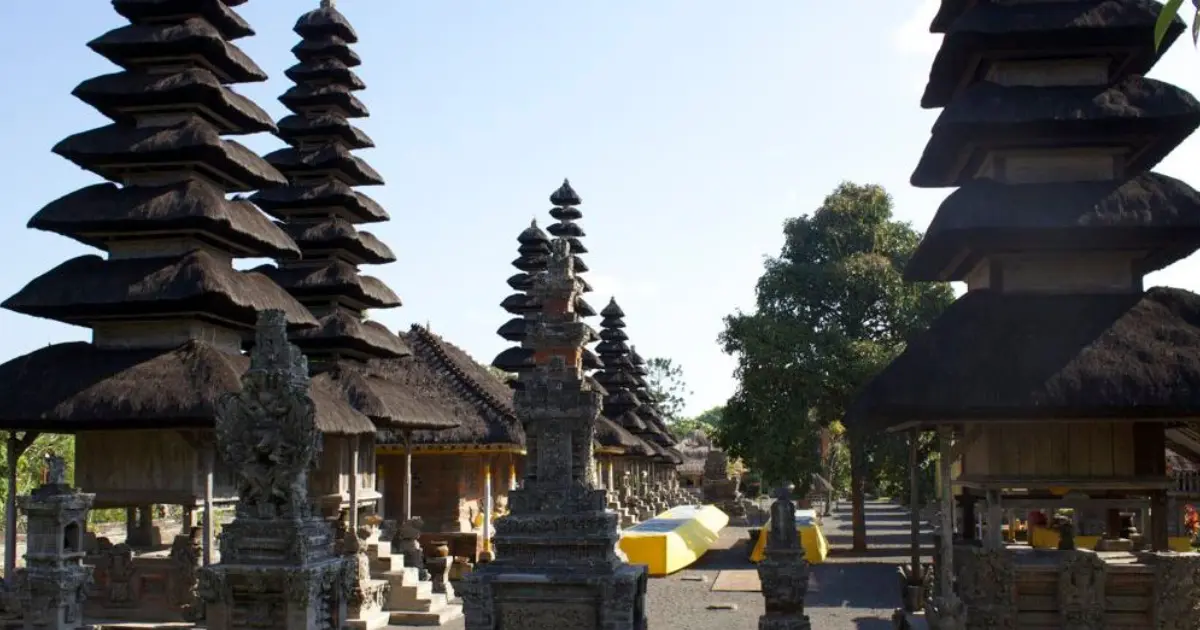
The temple proper (which is also known as the Royal Family Temple or the Water Temple), which is important in protecting Bali from evil spirits, is a place of worship for many different gods and goddesses of the Balinese mythology. The tiered towers (meru) of the center temple are supposed to represent the home of the gods.
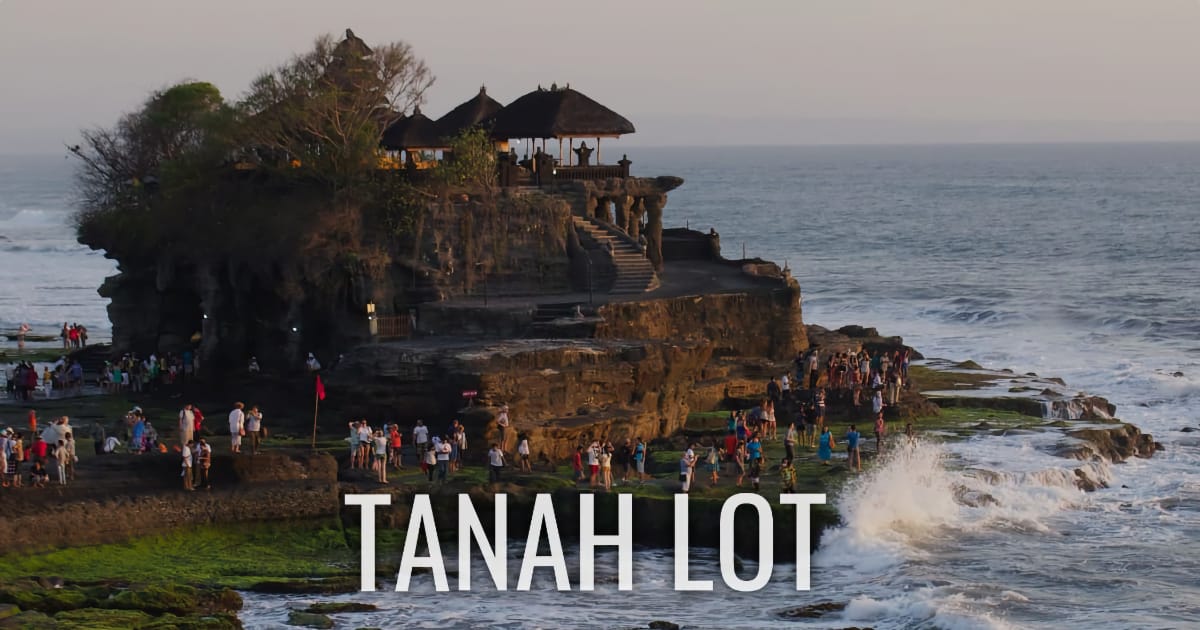
Tanah Lot is a rock formation that’s slightly off the southwestern coast of Bali. On top of this rock there’s a temple, Pura Tana Lot, which, becasue of its location, is only accessible during low tide and guarded by numerus poisonous sea snakes.
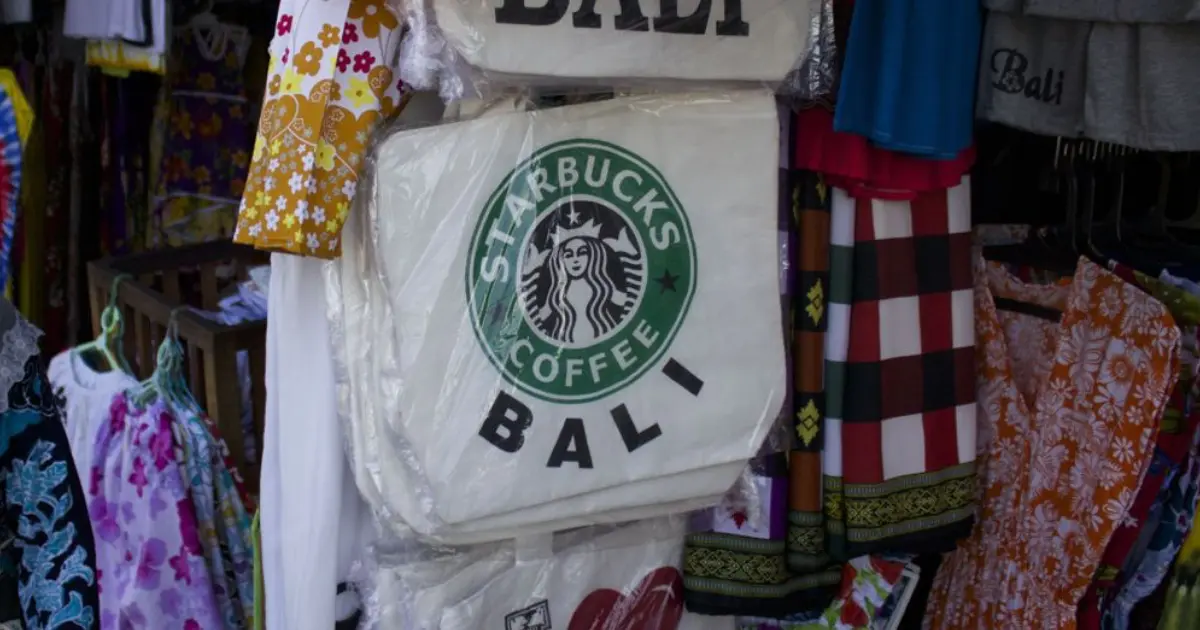
To see Tanah Lot, you have to walk through a bustling market made up of a great many shops selling a great many things (including branded Crocs and Quiksilver outlets). The whole thing felt a lot like walking down the Third Street Promenade in Santa Monica.
Tanah Lot is a very popular destination for tourists, and the place was packed with people. As such, the lines to get purified at the temple were very long. We passed on the purification ritual, so we couldn’t set foot upon the temple proper, which was okay. The day we visited they weren’t letting any visitors inside anyway. The best you could do was get a photo of yourself at the gate.
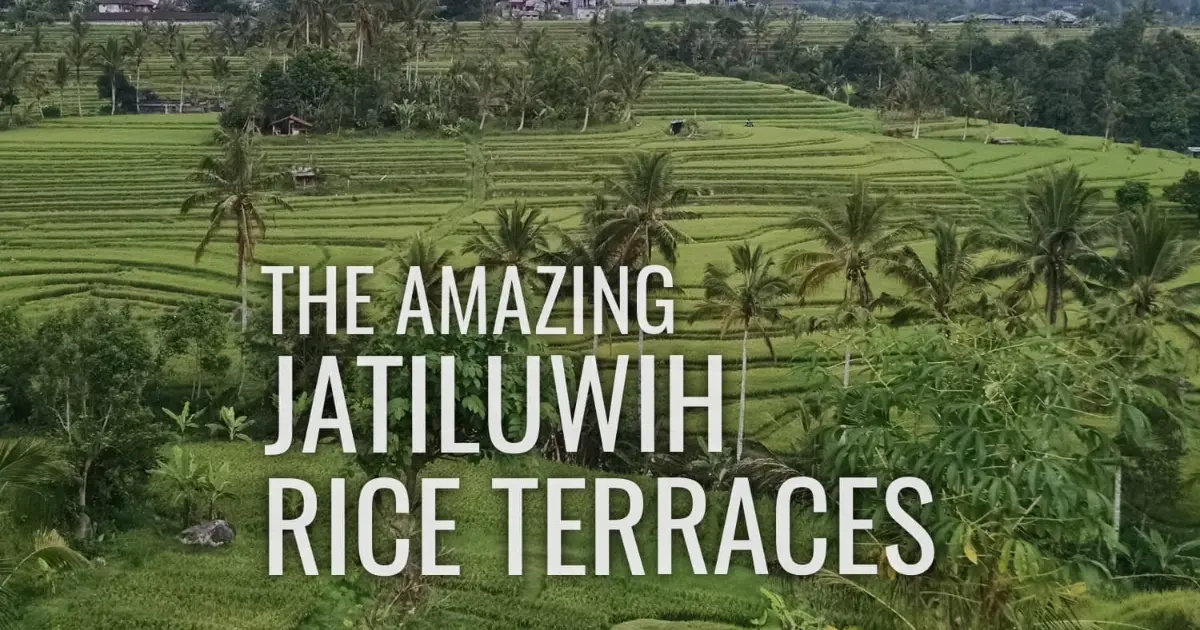
The Jatiluwih Rice Terraces are more than an hour’s drive north of Ubud Village and offer an ideal example of subak, the community-based system of irrigation and water management that is worthy of being named a UNESCO World Heritage site. We saw another aspect of subak earlier when we visited Pura Taman Ayun.
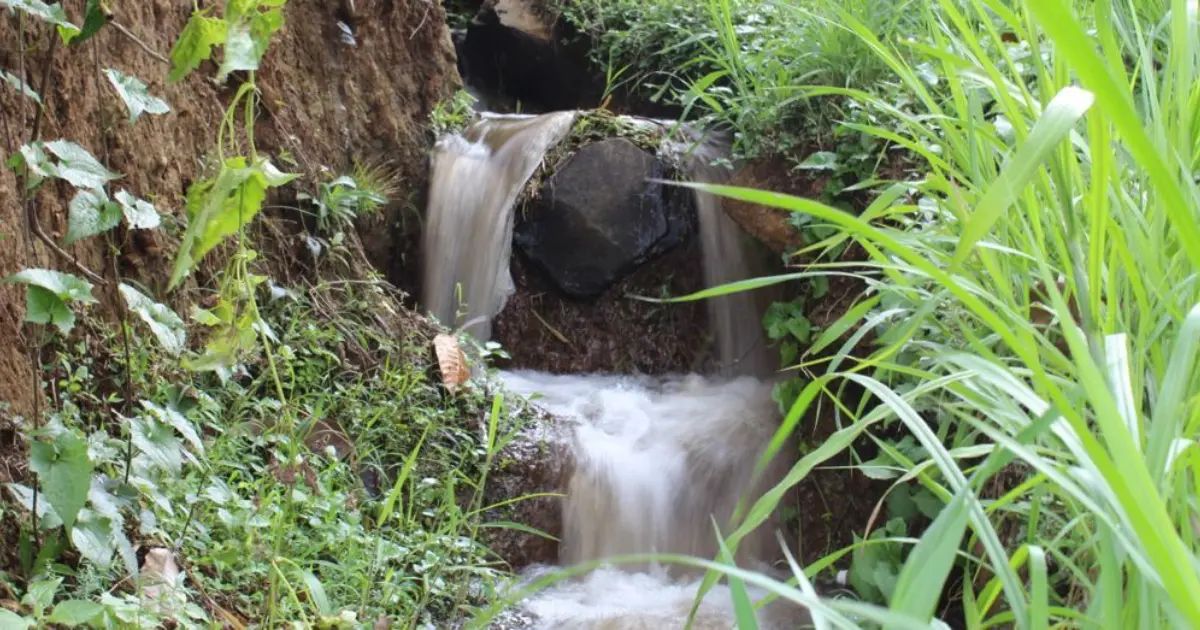
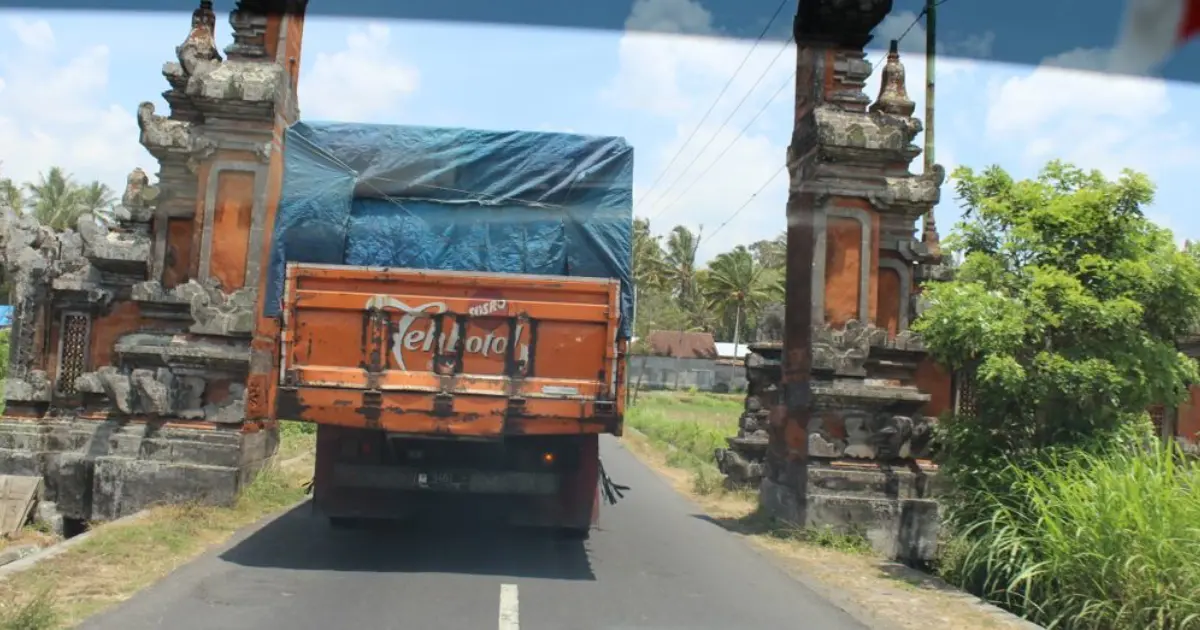
The road to Jatiluwih is a challenging one. The streets are narrow and often filled with deep ruts. On a few occasions we were off blacktop and bouncing down gravel and mud roads.
But we arrived at the rice fields without incident. And after a quick lunch (at some scammy tourist restaurant no longer in business), we spent about an hour wandering around the beautiful and expansive rice fields. We followed a marked tracking route down took us down the hill, through rows of planted rice, and along the irrigation channel.
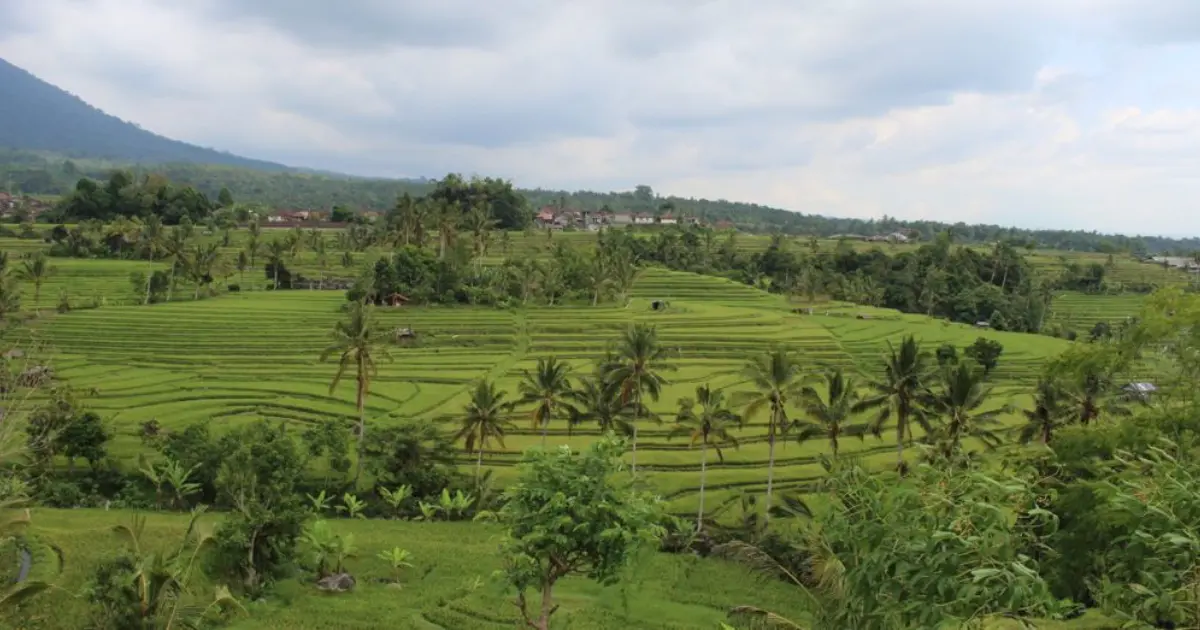
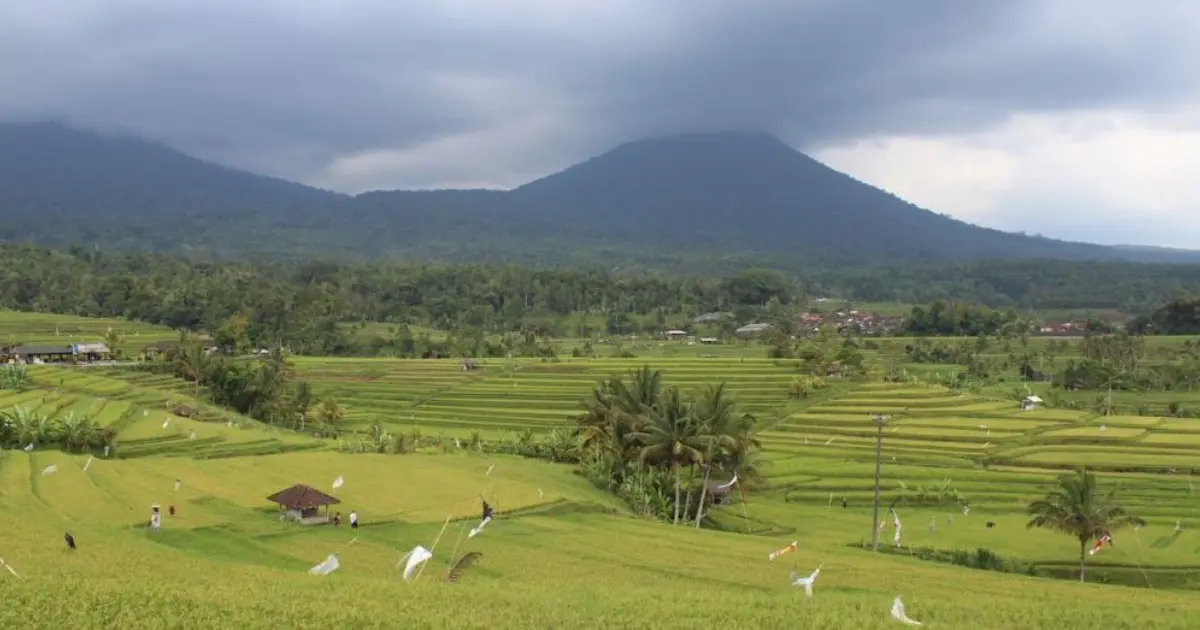
But the long drive out from our home base outside Ubud Village was worth it. The terraces of Jatiluwih, nestled in the shadow of Mount Batukaru are pretty impressive.
On our way to Jatiluwih, we took a brief detour to visit the Bali’s Elephant Cave, landmark that is part of a temple that’s still actively worshiped at, so Balinese decency standards apply. This means modest dress that covers the legs below the knee. And that means a saron (which you can borrow from the temple — so don’t get taken in by the waves of sarong peddlers in the parking lot).
There’s a little bit of a mystery surrounding Goa Gajah. Elephants are not native to Bali, and there are no elephants at the elephant cave.
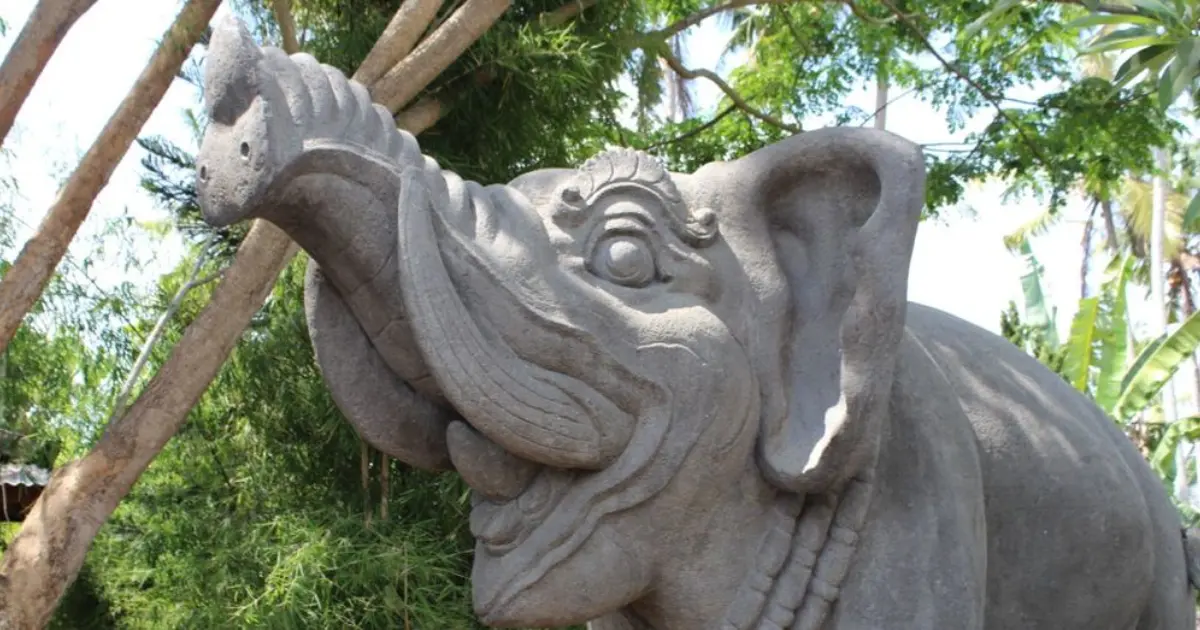
Some say the place got its name because the large face on the entrance to the cave resembles an elephant. Others say it’s so called because of its proximity to the Elephant River, but there’s no river of that name anywhere around here (though it’s possible a long time ago there was).
I can tell you one thing for sure, though — the face on the cave looks nothing like an elephant.
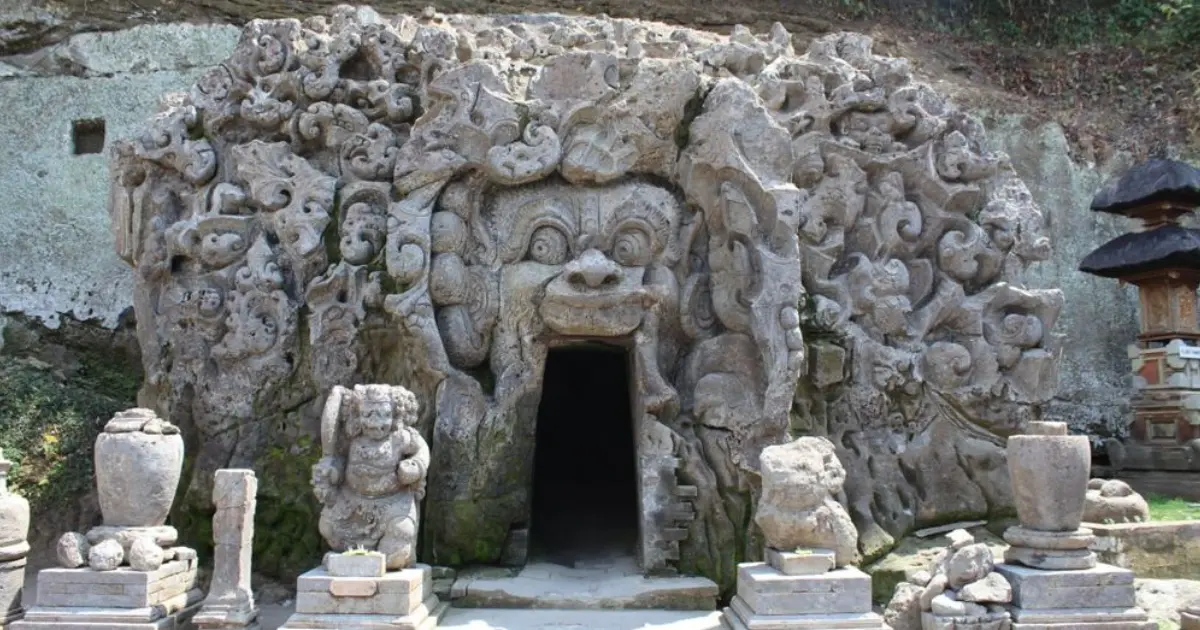
The origins of Goa Gajah are even more mysterious than how the place got its name. No one seems to know when it was built, exactly. Some sources say it dates back to the 9th century, others say the 11th, but most people seem to agree that it was built as a hermitage for both priests of Shiva and Buddhist monks, though not necessarily at the same time.
The cave was built (hand dug by priests, some say) near the point where two rivers meet, the Kali Pangkung River and the Petanu River, a natural occurrence that is believed to have magical properties.
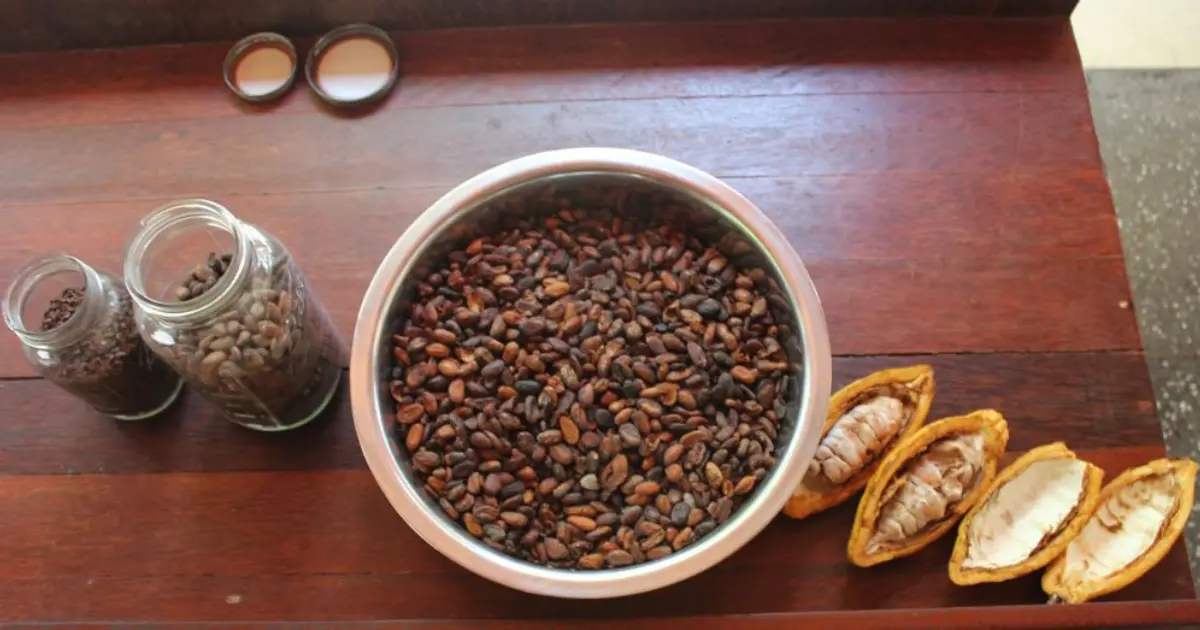
One day we traveled out to a place that made chocolate bars, where we learning about how cocoa is grown, cultivated, and turned into chocolate bars. We even got to make our own chocolate elephants.
Other than that, we visited a silver jewelry factory (that felt exploitative), a place that made wooden furniture (and a lot of carved penises — which are big in Bali), and spent a fair amount of time at the Pondok Pekak Library — where we took a class in making silvery jewelry.
But in general, we’d learn to slow down a bit in Bali. In addition to swimming in the pool, exploring Ubud Village, and trying out some of the nearby warungs (including a more than a few visits to Seniman Coffee), we also met and hung out with a number of other traveling families, which was a welcome bit of socializing for both kids and adults.
As our days in Bali wound down, the local rice paddy, the one we’d seen growing when we arrived in the country and subsequently harvested, was burned down. That seemed like the cue that it was time for us to start moving again.
Recounts the events of October 28–November 14, 2014. Days 69–86 of continuous travel.
► Continue the Journey ► Singapore
Taking on the World is an Amazon Associate and earns from qualifying purchases.

Header Image: The Barong dance. All images from the author’s collection.